Hollow polyester staple fiber (HPSF) is a synthetic fiber made from polyethylene terephthalate (PET), distinguished by one or more continuous air channels running through the core of each filament. This hollow architecture — achieved through specially designed spinnerets during the melt-spinning process — is what sets it apart from conventional solid polyester fiber. By replacing dense material with trapped air, the fiber becomes lighter, more compressible, and significantly better at retaining warmth.
Depending on the number of internal channels, HPSF is classified as single-hole, double-hole, or multi-hole fiber, with higher hole counts generally delivering greater loft and a softer hand feel. It is available in both virgin and recycled (rPET) grades, and produced across a wide range of deniers and staple lengths to suit applications from premium bedding to technical nonwovens.
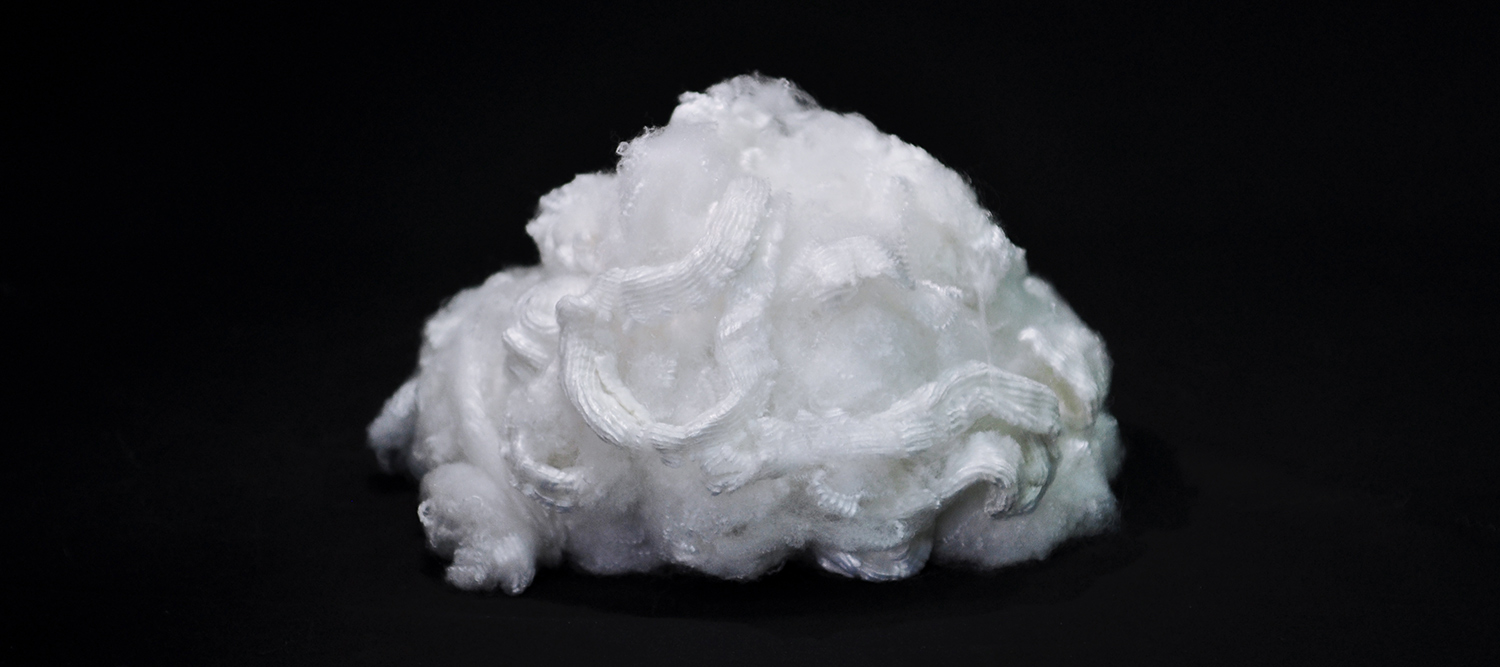
The hollow core does three things at once: it traps air for thermal insulation, creates natural bulk and resilience, and reduces the fiber's overall density. The result is a fill material that is lighter than solid polyester at equivalent loft levels, and far more accessible in price than natural down — while delivering comparable warmth and softness in many end-use contexts. Siliconized variants, where the fiber surface carries a silicone finish, further enhance spring-back and give the fill a smoother, more down-like feel.
HPSF can be produced from post-consumer recycled PET, typically sourced from plastic bottles. For brands navigating sustainability commitments, rPET hollow fiber offers a credible performance-equivalent substitute for virgin material, with traceability supported by certifications such as the Global Recycled Standard (GRS).
The most consequential variables when specifying HPSF are denier, fiber length, hollow ratio, and surface finish. Denier determines softness and hand feel — finer counts (3D–7D) suit pillows, duvets, and apparel padding, while coarser counts handle structural or nonwoven applications. Fiber length is matched to processing equipment, with shorter staples (32–51 mm) used in nonwoven lines and longer lengths (51–64 mm) in bedding filling machinery. The hollow ratio — the proportion of cross-sectional area occupied by air — directly affects insulation value and bulk density; higher ratios improve thermal performance but require more careful handling to avoid fiber damage during processing.
Surface finish is a sourcing decision that significantly affects end-product quality. Siliconized fiber flows better through machinery, recovers loft more consistently, and feels noticeably softer to the end consumer. Non-siliconized fiber is more economical and appropriate for applications where tactile quality is secondary.
Beyond these parameters, buyers sourcing for regulated markets or sustainability-committed brands should confirm certification coverage — OEKO-TEX Standard 100 for skin-contact products, GRS for recycled content claims, and EN 71 where children's products are involved.
The right fiber is defined by what the finished product needs to do. A pillow insert, a thermal jacket liner, and a stuffed toy all call for different combinations of denier, hollow ratio, and finish — and suppliers worth working with will ask these questions before recommending a grade. Buyers should also request loft or fill power equivalency data, which allows meaningful comparison across fiber grades and against down benchmarks.
Consistency matters more than sample quality. Initial samples often represent best-case production, so it is worth requesting test data across multiple lots and establishing clear incoming quality parameters before committing to a supplier. For recycled grades, confirm that GRS chain-of-custody certification covers the full supply chain — from fiber through to finished goods — before making any recycled content claims to retail customers.